
News

Cleveland FES Center Restores Movement To Individuals With Neuromuscular Disabilities Using MathWorks Tools

The MathWorks today announced that the Cleveland FES Center, using tools for Model-Based Design, has developed research technology that more quickly restores movement to individuals with neuromuscular disabilities. Adopting Model-Based Design reduced the development time of functional electrical stimulation (FES) devices and enabled researchers to build customized prototypes for patients many times faster than they could do before.

Read the full press release

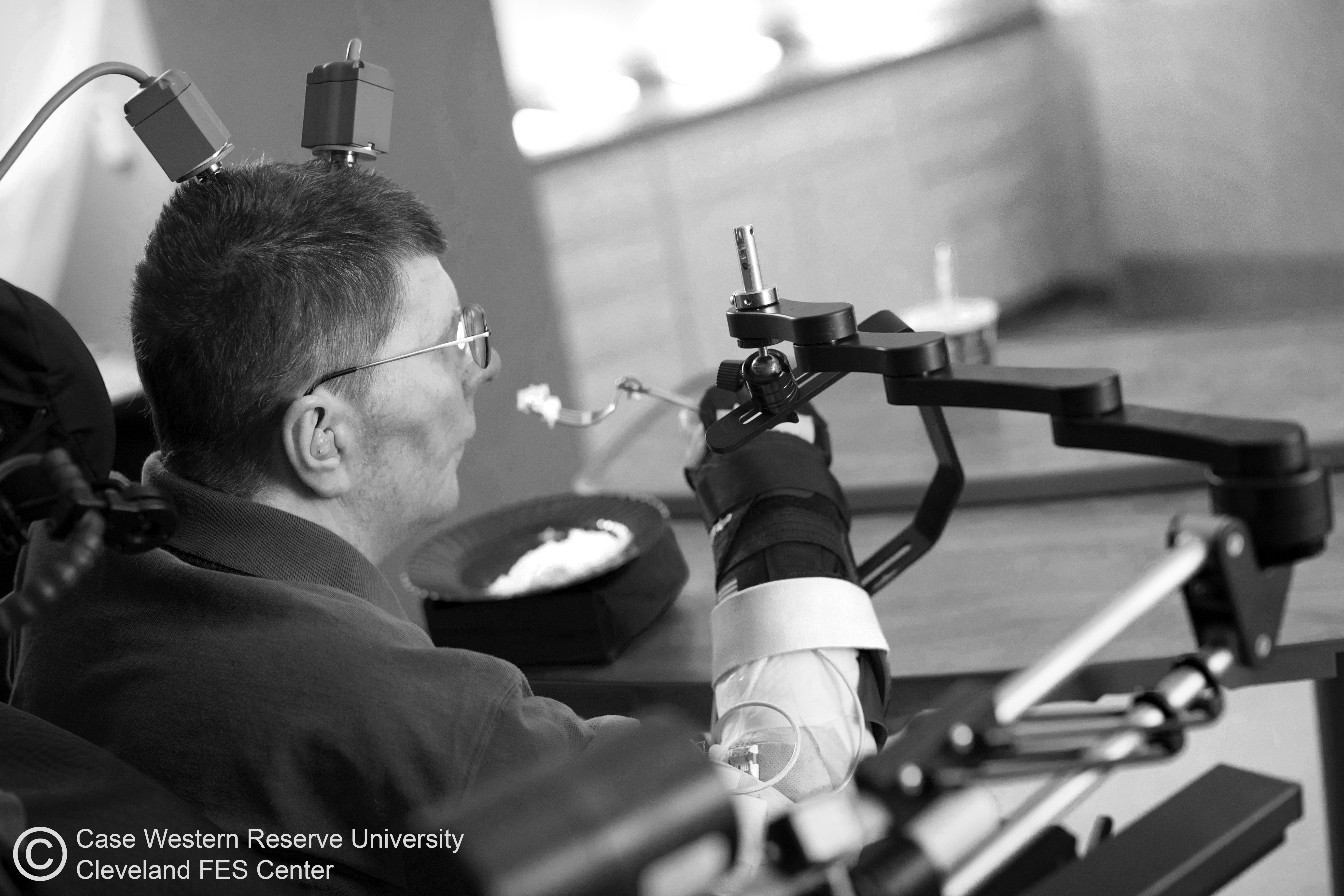
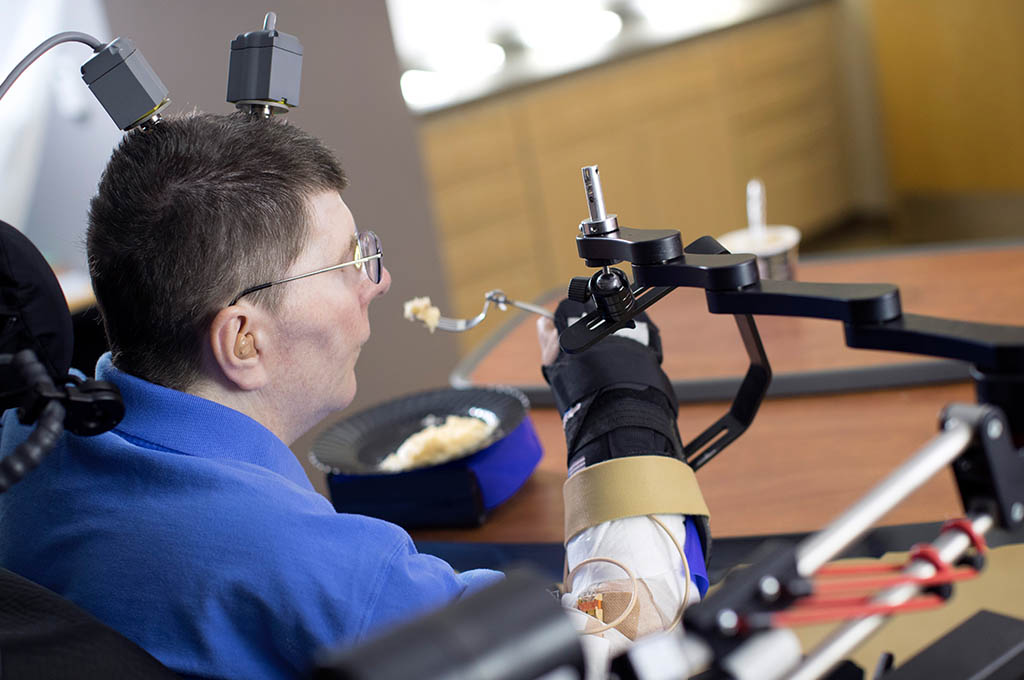
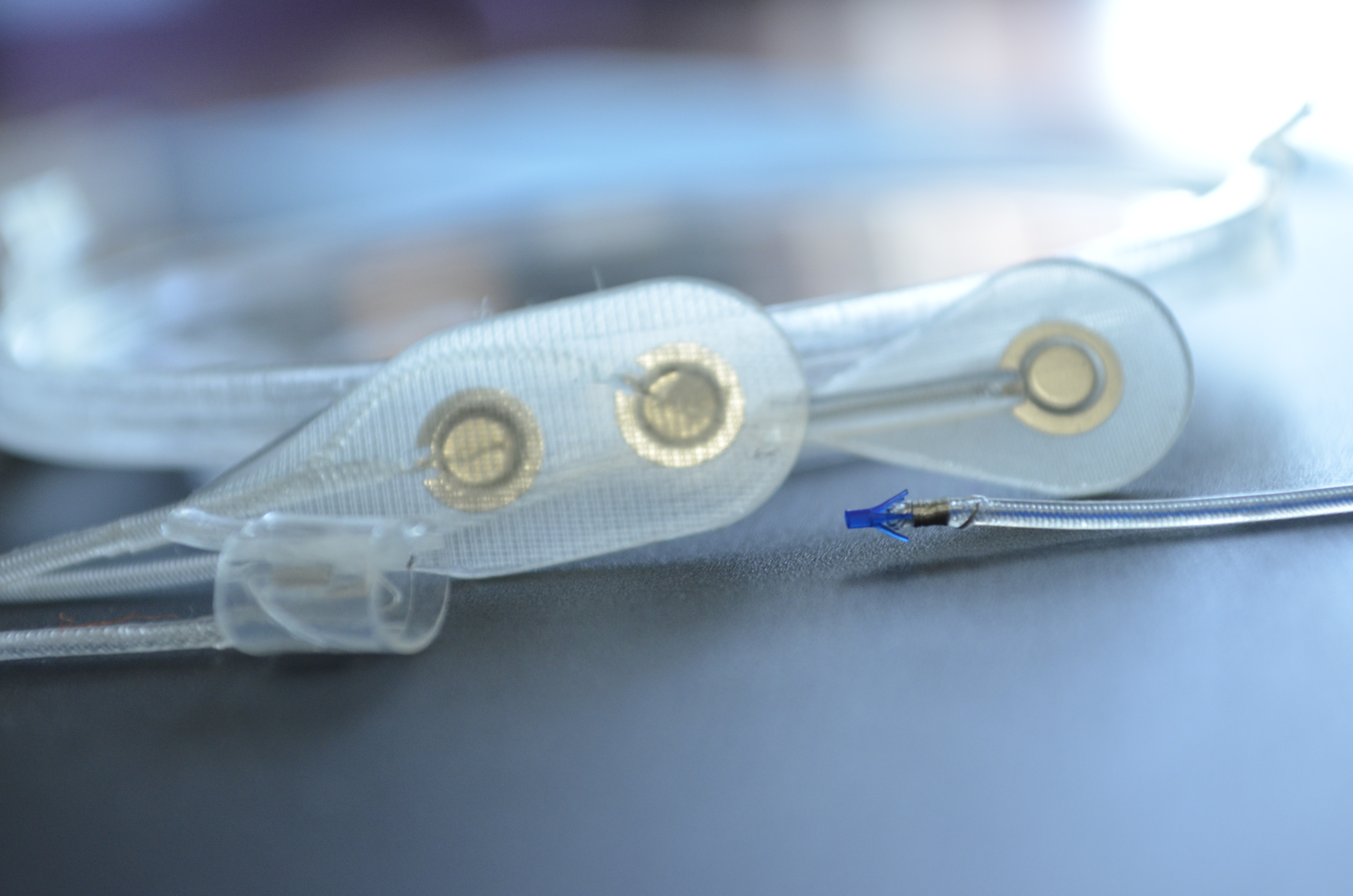
FES devices restore movement to paralyzed arms and legs. They send electrical impulses to electrodes—implanted in the body, worn on the skin, or operating through the skin—to produce and control movement. Adapting the FES device for each patient was a time-consuming process, as the device software needed multiple iterations for a customized response to each patient’s needs.

The Cleveland FES Center, at Case Western Reserve University, developed the Universal External Control Unit (UECU) to address the need for tailored FES devices. With the UECU’s modular software and hardware design, research engineers in the clinic can modify a FES controller application and immediately test the results.

With MathWorks tools, teams are able to develop, test, and implement algorithms that suit specific patient scenarios, reducing the traditional development cycle for some FES functions to less than a day.

“All of our FES applications used to be built by dedicated programmers using C code,” said Robert Kirsch, PhD, Professor, Biomedical Engineering, Case Western Reserve University and Associate Director of Technology, Cleveland FES Center. “The overall process was slow because everything had to be done by our central programmers, which limited how quickly we could move from idea to implementation. MathWorks tools for Model-Based Design provide the flexibility and ease of use that enables our clinical groups to develop and refine FES applications on their own.”

“An approach like Model-Based Design is ideal for researchers and scientists who may not have an extensive software programming background but who are still involved in product design and development,” said Paul Barnard, marketing director - design automation, at The MathWorks. “The creation of industry firsts, such as the UECU, demonstrates just how critical MathWorks tools have become in the field of biomedical research.”

The UECU project involved a range of MathWorks products beyond MATLAB and Simulink , including Signal Processing Blockset , Stateflow , Real-Time Workshop , xPC Target , and xPC Target Embedded Option . More than 30 UECUs are currently in use by patients today, and over the next decade, the Cleveland FES Center aims to introduce a new technology that is a fully internal system, inside the body. This modular and expandable system is expected to provide patients with more functionality and independence. The lab prototypes of the new system are aleady running programs created with Simulink and Real-Time Workshop.

Press Coverage

In the News

August 19, 2010

The Miracle of Science: Helping People with Spinal Cord Injuries Walk

The Miracle of Science: Helping People with Spinal Cord Injuries Walk

You have a spinal cord injury (SCI). Frequently you hear about treatments that may restore mobility, even to the extent of standing and walking. Many of these treatments are offered outside of the United States, and are not regulated by the FDA. The reactions of your support people, including your physicians and therapists, are skeptical and it can be difficult to find reliable data on these options.

More

July 6, 2010

Neuros Medical Awarded $1.5 million from U.S. Department of Defense

Neuros Medical Awarded $1.5 million from U.S. Department of Defense

CLEVELAND — Neuros Medical, Inc., a medical device company announced today they have received notification of award for $1.5 million from the U.S. Department of Defense. The Applied Research and Technology Development Award was provided by the Defense Medical Research and Development Program (DMRDP).

More

June 10, 2010

Building Function, Building Hope: Orthotic Management of Pediatric Spinal Cord Injury

Building Function, Building Hope: Orthotic Management of Pediatric Spinal Cord Injury

Life, as they say, can turn on a dime. One of the everyday pleasures in a child's life—a car trip, school football game, or bounce on a trampoline—can end with a disastrous snap. Partial or complete spinal cord injury (SCI) currently affects as many as 63,000 American children, according to the Christopher & Dana Reeve Foundation, with consequences that can begin with neural deficit or paralysis and extend to a lifetime of secondary medical problems.

More