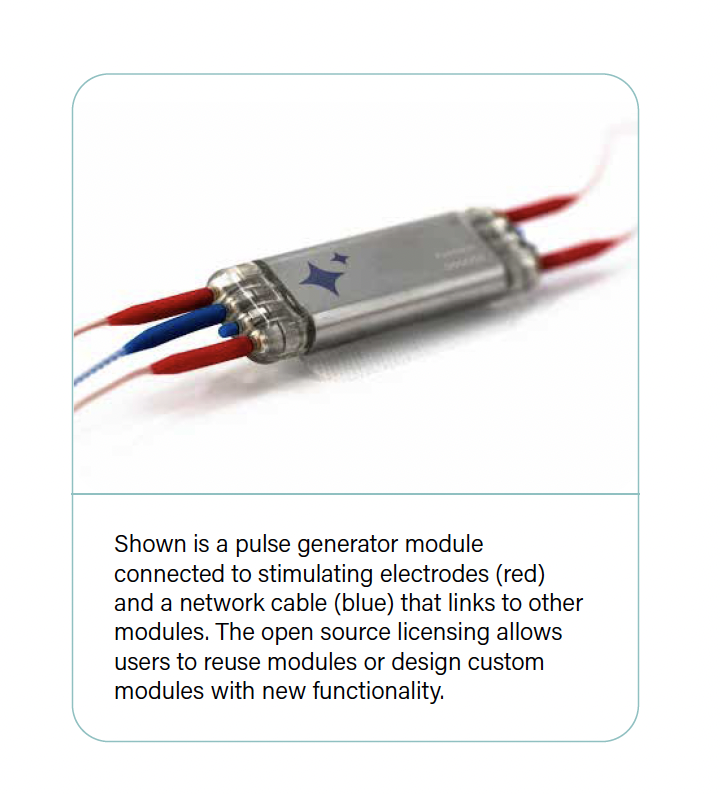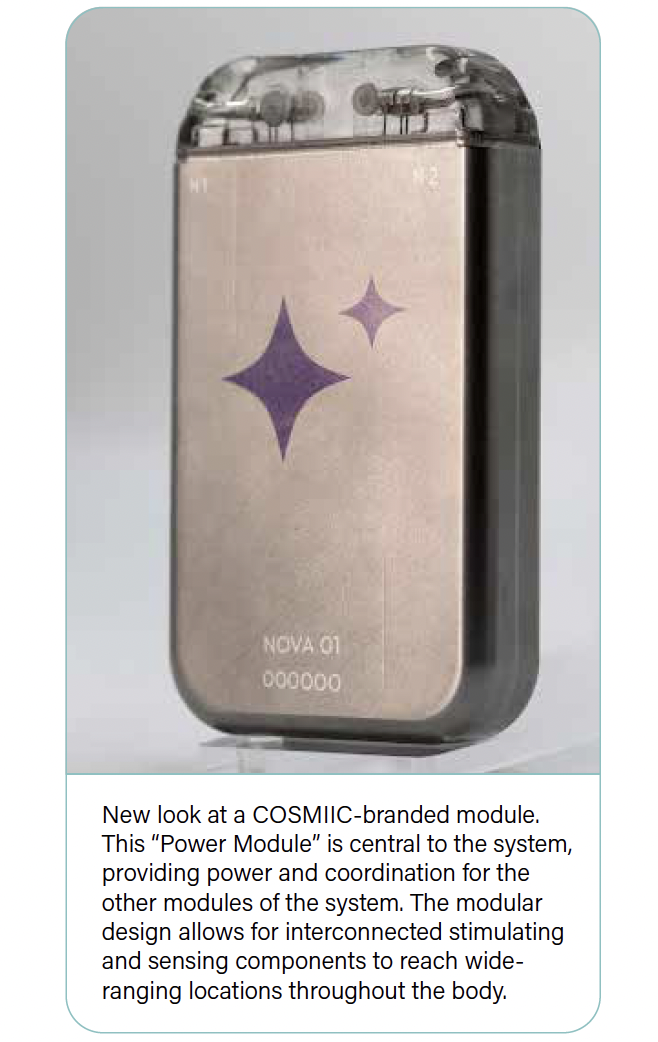
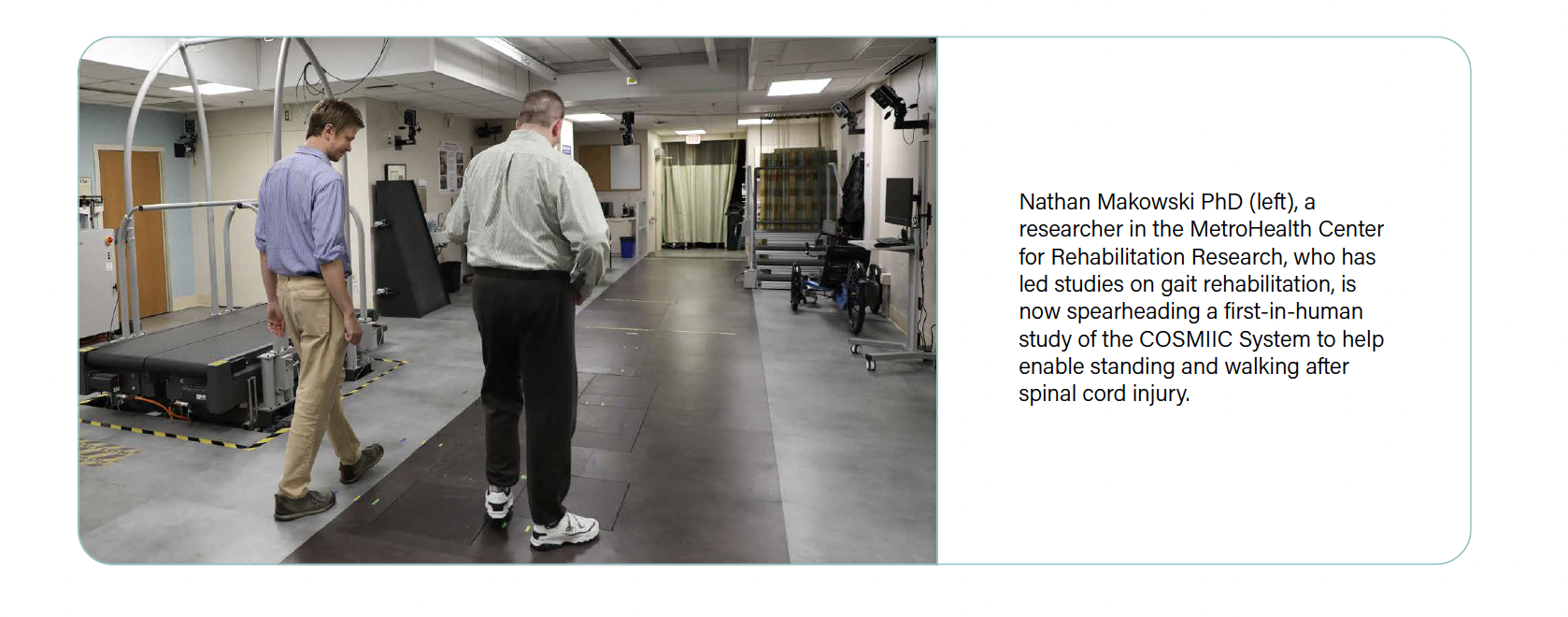
Referencing an existing Investigational Device Exemption (IDE) for the COSMIIC System-originally for another medical indication-the team’s access to an open source IDE reduced the testing and novel documentation required to implement the technology in people with iSCI for walking. The team has secured IDE approval to use the device for an early feasibility study in humans. Achieving this IDE with open documentation demonstrates how fundamental
regulatory resources can be shared and how federally funded open source neurotechnology can benefit researchers and Veterans and non-Veterans.
A New Concept for Neurotech Development Supported by SPARC Program Funding
The COSMIIC System itself was established by an investment from the NIH SPARC Program into open source platforms designed to accelerate innovation in bioelectronic medicine. The open source framework offers a new pathway for biomedical researchers to translate work into clinical applications faster by eliminating costs and barriers associated with proprietary technologies. The technology was originally developed at CWRU, supported by the National Institute of Biomedical Imaging and Bioengineering and National Institute of Neurological Disorders and Stroke.
“This DoD funded project at the VA would not be possible without the foundational NIH investment in open source human-grade implantable devices,” said. Dr. Makowski. “We are now seeing the potential for scalable, modular technology supported by public funding to directly benefit Americans living with disability.”
This milestone not only represents the first new use of the COSMIIC System in humans, but is also a model of interagency synergy- NIH investment in fundamental technology is being advanced by VA investigators and Department of Defense funding to meet clinical needs. By combining public funding with open innovation, this effort opens new possibilities for restoring independence to those living with disability.