Learn More About Our Research Programs
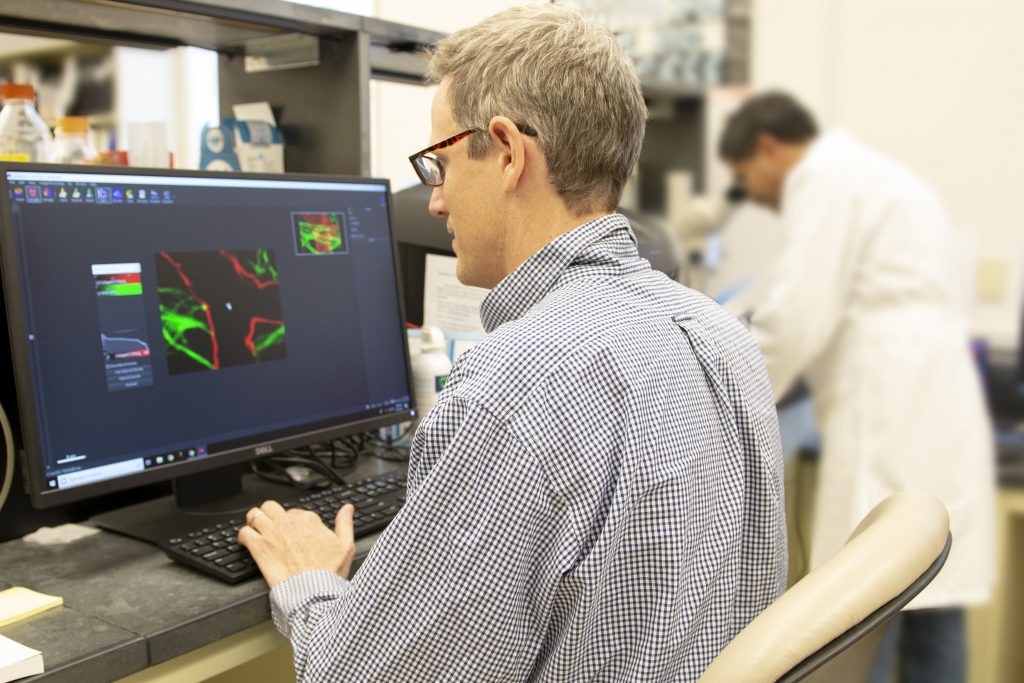
The discovery and development of novel clinical applications begin with research.
The Cleveland FES Center is a leader in research initiatives in the field of functional electrical stimulation (FES). These efforts depend on a complementary relationship between discovery and application. Our research encompasses both clinical and fundamental studies, incorporating tools and technologies across multiple domains.
Programs within the Cleveland FES Center consistently push the limits of technology, seeking innovations in neural interfaces, neuromodulation systems, materials, and electrode design to improve human motor control, motor learning, and fundamental studies.
Explore the options below to discover more about our research.
- Upper Extremity Function
- Pelvic Health
- Cough Restoration
- General Neurorecovery
- Gait
- Deep Brain Stimulation for Visuomotor Function
- Lower Extremity Exercise
- Pimavanserin vs. Quetiapine for Treatment of Parkinson’s Psychosis
- Leg Stretching Using an Exoskeleton
- Brain Connectivity Changes with Spinal Cord Stimulation
- Treatment of Chronic Pain
- Upper Limb Motor Deficits
- Gait Rehab
- Spatial Neglect
- Evaluating the Experience of Upper Limbs Prosthesis Users
- Peripheral Interfaces for Sensorimotor Integration
- Proprioceptive Sensorimotor Integration with Neural Interfaces for Hand Prosthesis
Traumatic Brain Injury Programs
- Multimodal, Enriched Environment for Rehabilitation
- Home-based Vision Therapy
- Nerve Block Applications
- Deep Brain Stimulation for Rehabilitation
- Microstimulation for Spinal Cord Injury Rehabilitation
- Assessing Cardio-respiratory Circuits & Function
- Seizure Control and Transcranial Electric Stimulation
- Pain Management & Detection
- Electrode Design for Standing Neuroprostheses
- Neuronal Control of the Ocular Surface
- Establishing an Open Source, Modular Network of Implantable Devices