Treating Upper Limb Function After Stroke
When a stroke occurs, it can affect the area of the brain that controls movement, swallowing, speech and other fundamental tasks.
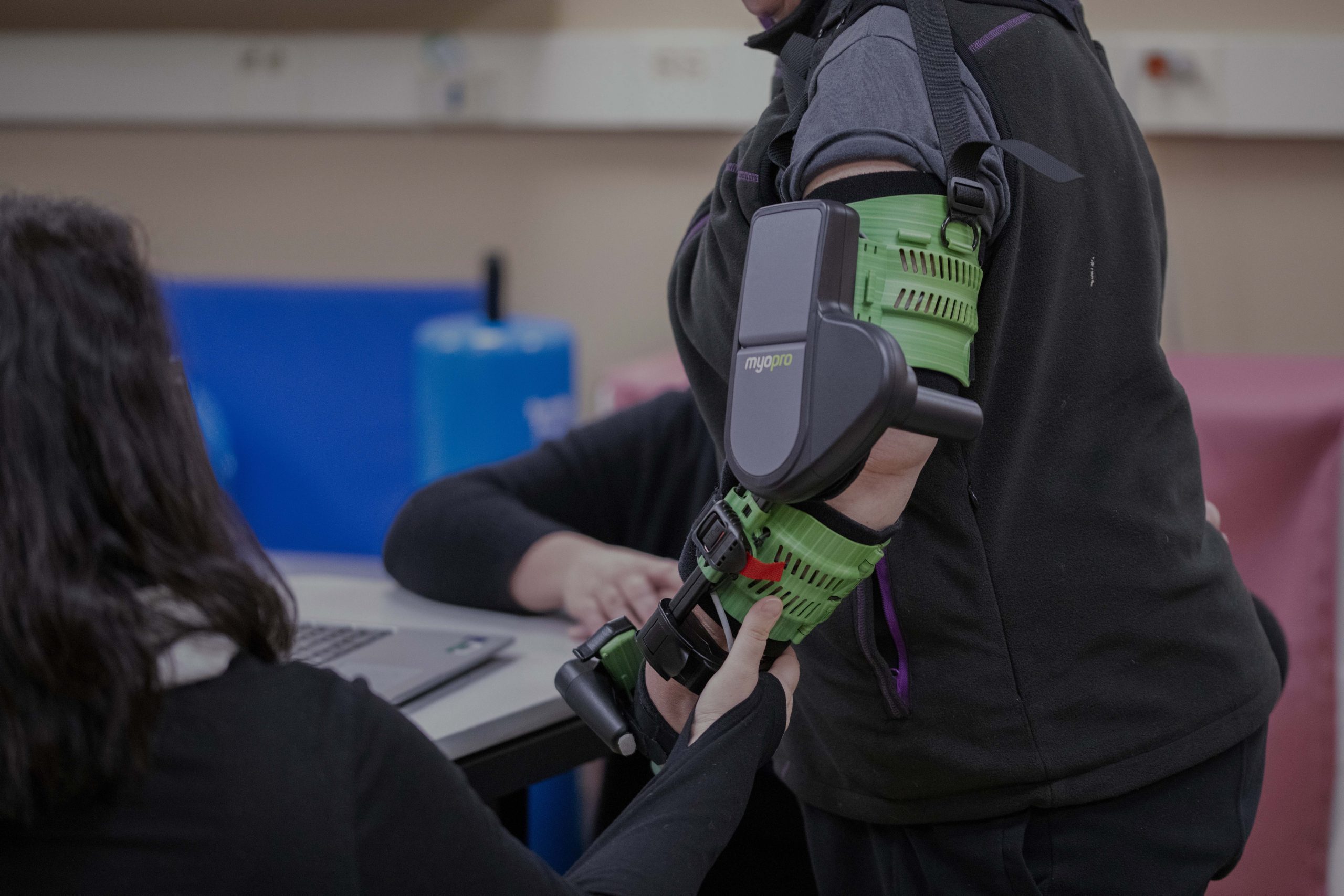
The loss of upper arm or hand function, and/or shoulder pain, is common after stroke. Usually some hand movement returns but often not enough movement returns to make the hand functional again.
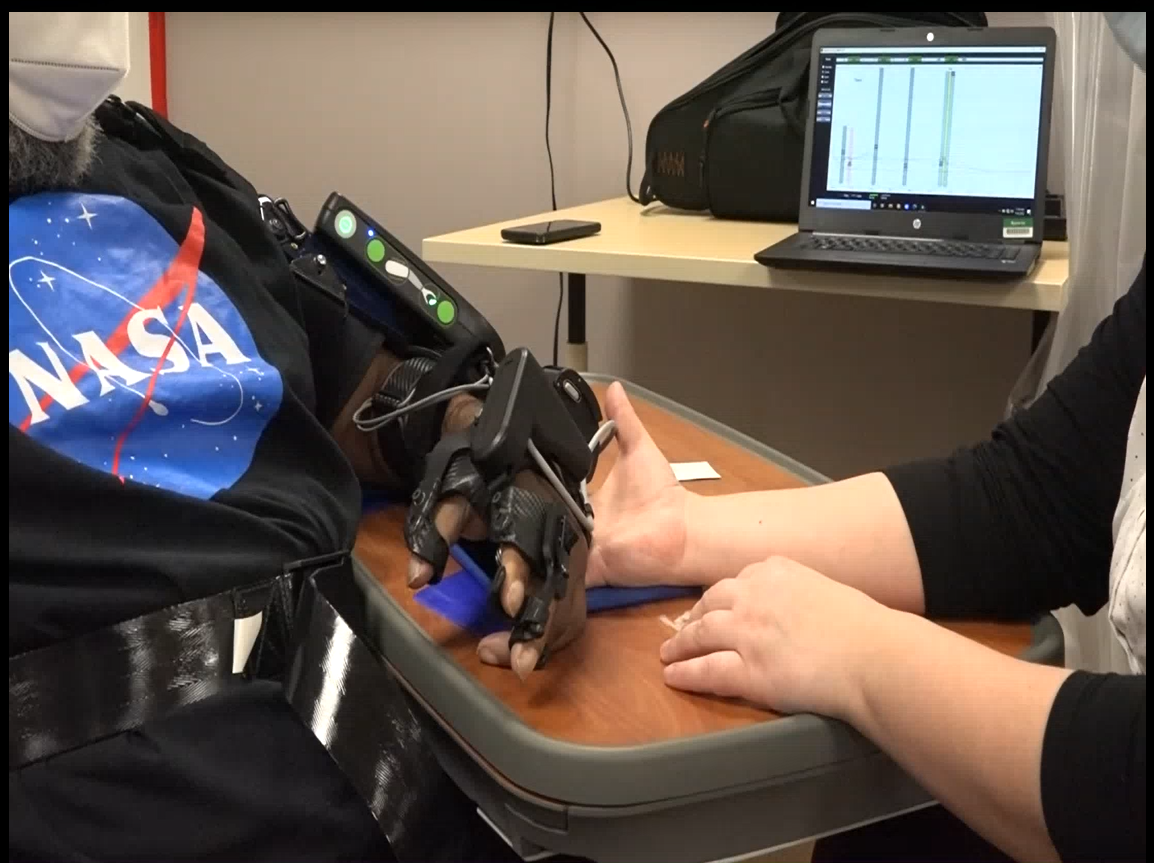
Electrical stimulation can be used to open the hands of stroke survivors. This can be done with electrodes that adhere to the skin on the back of the forearm.
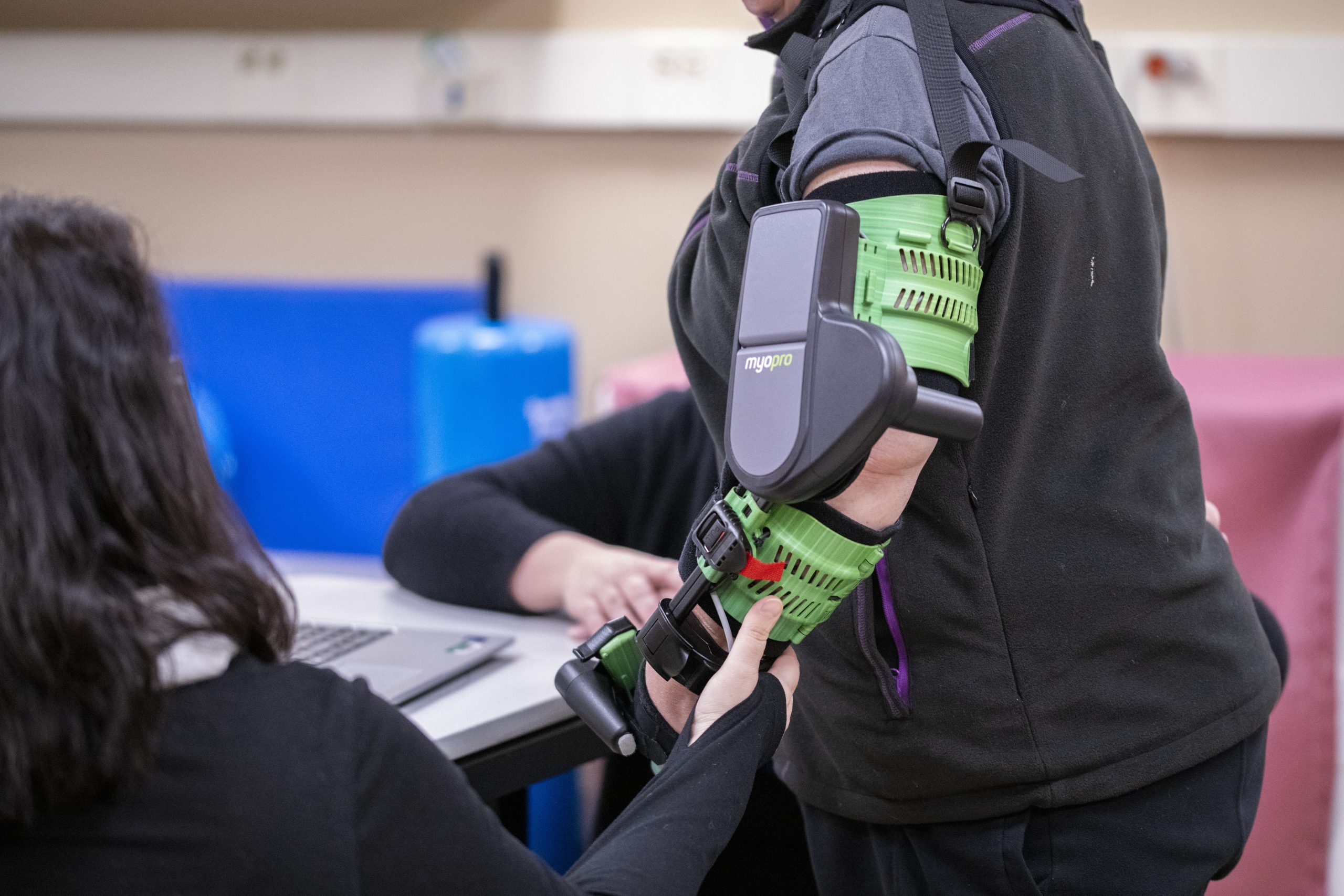
If electrical stimulation is delivered at the same time the patient attempts to open the hand, there may be a greater chance for recovery (or relearning) of hand movement and control.
If electrical stimulation is controlled by the patient, the effect on motor recovery might be even greater.
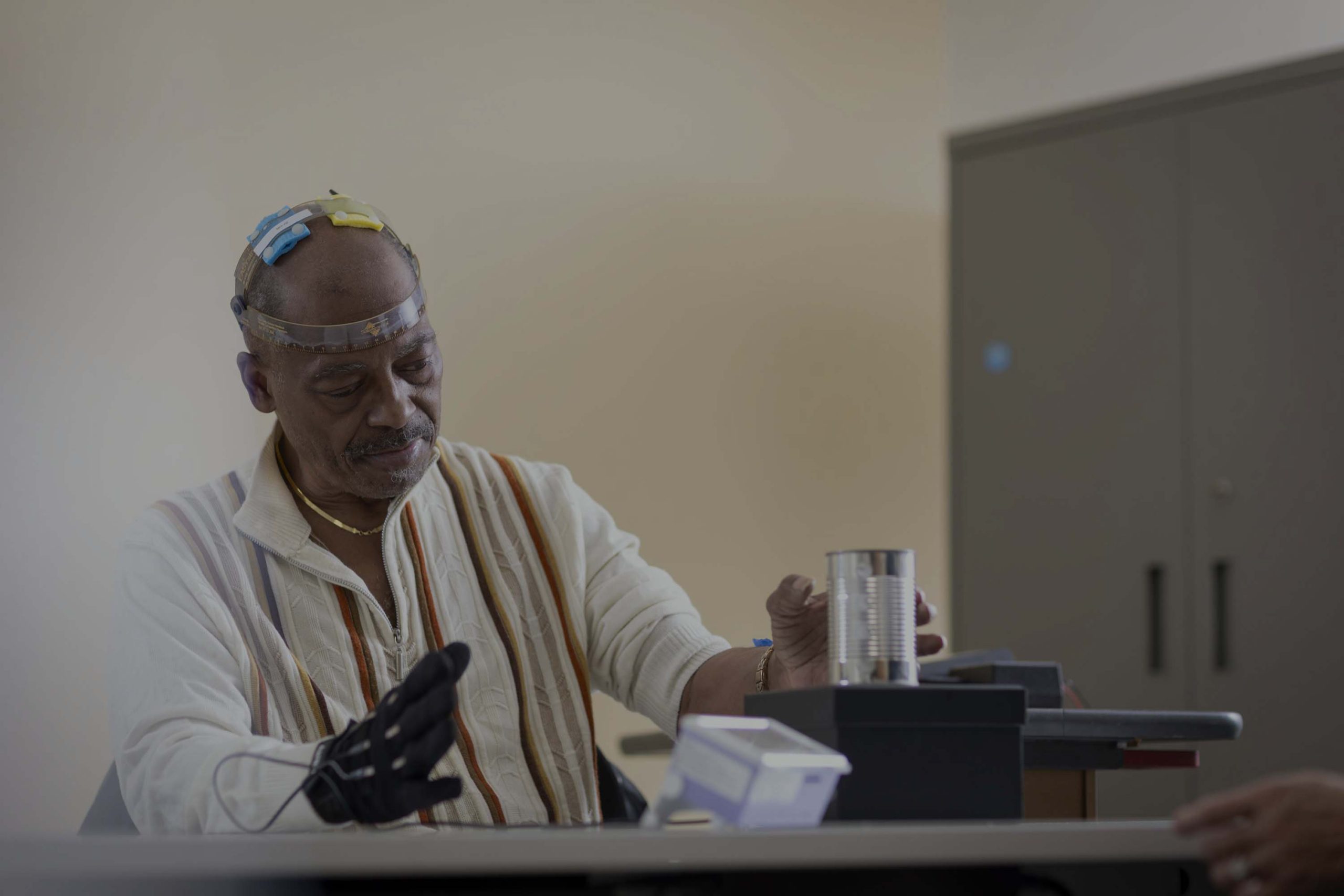
Researchers at the Cleveland FES Center have developed a new treatment in which stroke survivors control stimulation to their weak hand through a glove worn on their unaffected hand. This new treatment is called Contralaterally Controlled Functional Electrical Stimulation, or CCFES.
Shoulder pain following stroke is also common, often debilitating, and difficult to treat. It is a major rehabilitation problem affecting a large number of stroke survivors, and it is associated with poor rehabilitation outcomes, including impaired activities of daily living and poor quality of life.
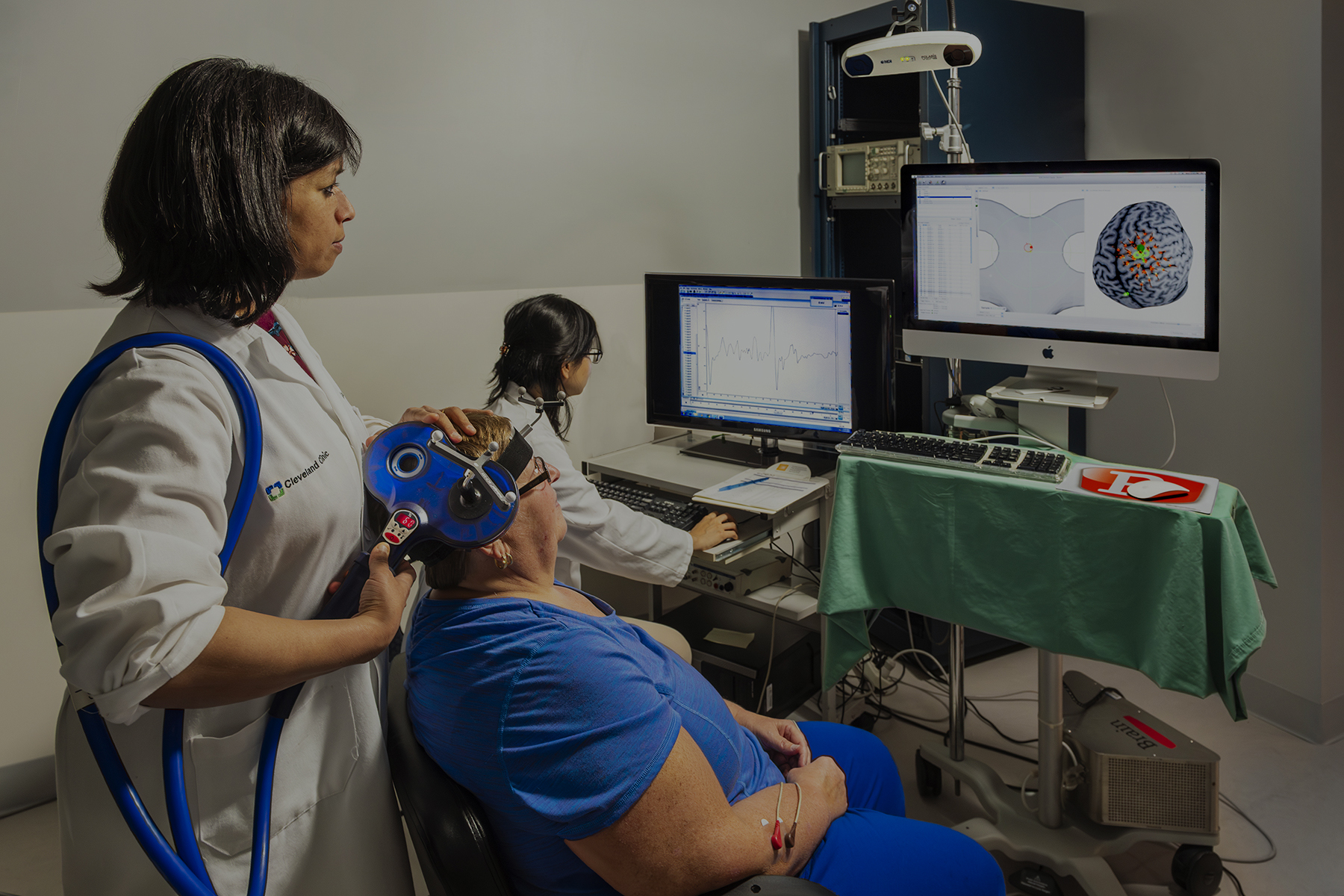
There is no standard treatment for shoulder pain following stroke, although physical therapy is usually a component. Investigators at the FES Center have explored several areas of research in order to better understand both the problem of shoulder pain and its potential treatment, including treatment by neuromuscular electrical stimulation.
Overview of Post-Stroke Upper Extremity Research
The FES research for upper extremity rehabilitation after stroke survivors includes a variety of therapy approaches and comparisons all designed to understand which measures and situations may produce the greatest benefits. View the study pages below for details.