
Comparison of Three Non-invasive Brain Stimulation Protocols Plus Therapy for Post-Stroke Upper Extremity Rehabilitation
This study compares three non-invasive brain stimulation protocols combined with therapy to see if they result in different amounts of recovery of hand movement after a stroke.
After a stroke, it is very common to lose the ability to open the affected hand. Occupational and physical rehabilitation therapy (OT and PT) combined with non-invasive brain stimulation may help a person recover hand movement.
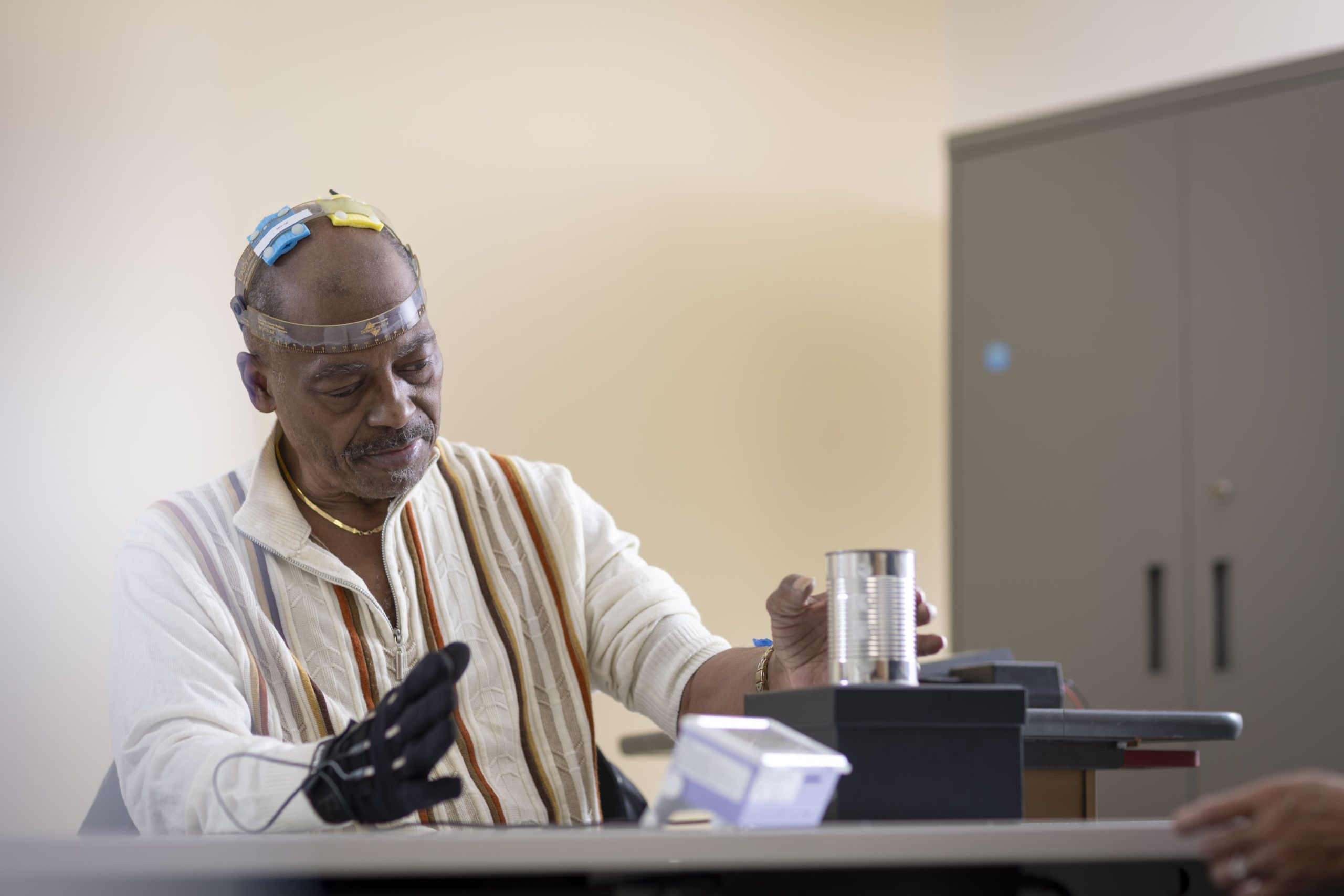
The purpose of this study is to compare 3 non-invasive brain stimulation protocols combined with therapy to see if they result in different amounts of recovery of hand movement after a stroke.
This study is a randomized clinical trial (RCT) of stroke survivors with chronic (6 to 24 months) hemiplegia randomized to: 1) conventional transcranial direct current stimulation (tDCS), 2) unconventional tDCS, or 3) sham tDCS during contralaterally controlled functional electrical stimulation mediated occupational therapy. The treatment will last 12 weeks and be followed by a 6-month follow-up period. Assessors, therapists and participants will be blinded to which tDCS treatment is received. This will be the first RCT of tDCS + CCFES.
Detailed study information is available at https://clinicaltrials.gov/study/NCT05866003.
For More Information
Contact Request
If you would like more information about becoming a research volunteer please submit the information below.