
Developing Sensory Feedback Strategies to Maximize Function After Tetraplegia
This study aims to develop and optimize novel neurostimulation strategies to restore informative somatosensation to people with tetraplegia.
Sensory feedback is critical for regulating dexterous grasp during activities of daily living and for emotional connection with loved ones. Neuroprostheses to restore voluntary control of reaching and grasping to users with paralysis will be more likely to achieve clinically meaningful benefits in independence and quality of life if sensory feedback is integrated into these systems.
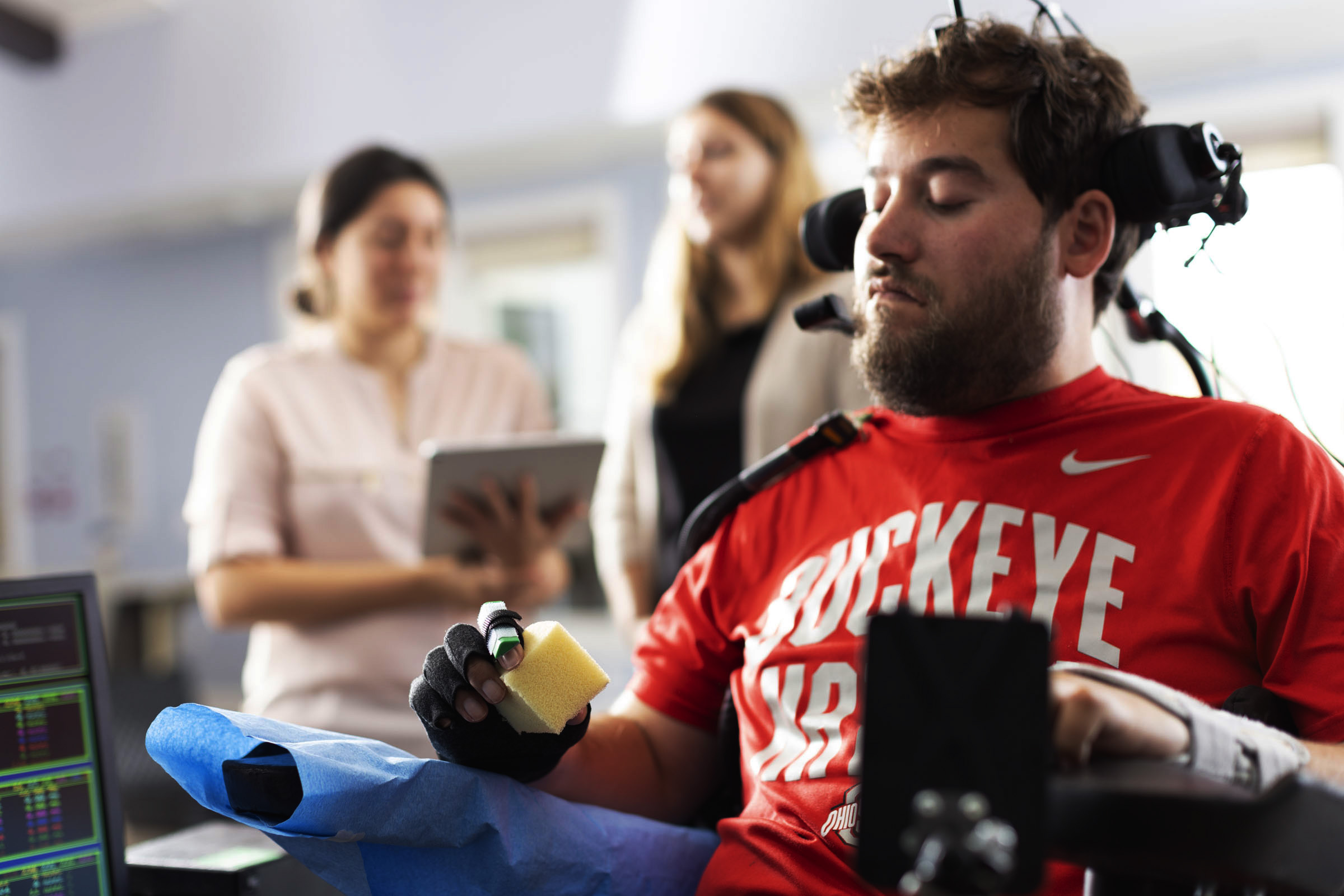
The team’s central hypothesis is that restoring sensation with intracortical microstimulation (ICMS) of primary somatosensory cortex and/or peripheral nerve stimulation (PNS) will improve performance of brain-controlled grasp tasks. The secondary hypothesis is that paired ICMS and PNS will promote neuroplasticity and enable users to recover some of the below-injury sensory function lost due to spinal cord injury.
Three participants with chronic tetraplegia enrolled in an existing clinical trial who have already received chronically implanted cortical arrays and nerve cuff electrodes will participate in the proposed study.
The proposed work will improve our understanding of the perception of neurostimulation applied throughout the sensory nervous system, the benefits of restored sensation on the functional utility of brain-controlled neuroprostheses, and the role of touch information content in these outcomes.
This study will also determine the feasibility of a future therapeutic intervention using neurostimulation for below-injury sensory recovery. Study findings have implications for the future development and translation of neuroprostheses to restore sensorimotor function to people with tetraplegia.
For More Information
Principal Investigator: Emily Graczyk PhD