
Leg Stretching Using an Exoskeleton for Spasticity
This study aims to assess the use of a lower-limb exoskeleton for improving leg and walking function in people with movement disorders.
The purpose of this research study is to develop a protocol using a fully wearable, portable lower-limb exoskeleton for improving leg and walking function in people with movement disorders. The study investigates the effects of wearing the device during a set of experiments including leg stretching, treadmill walking and overground walking in muscle activity, joint motion, and gait performance.
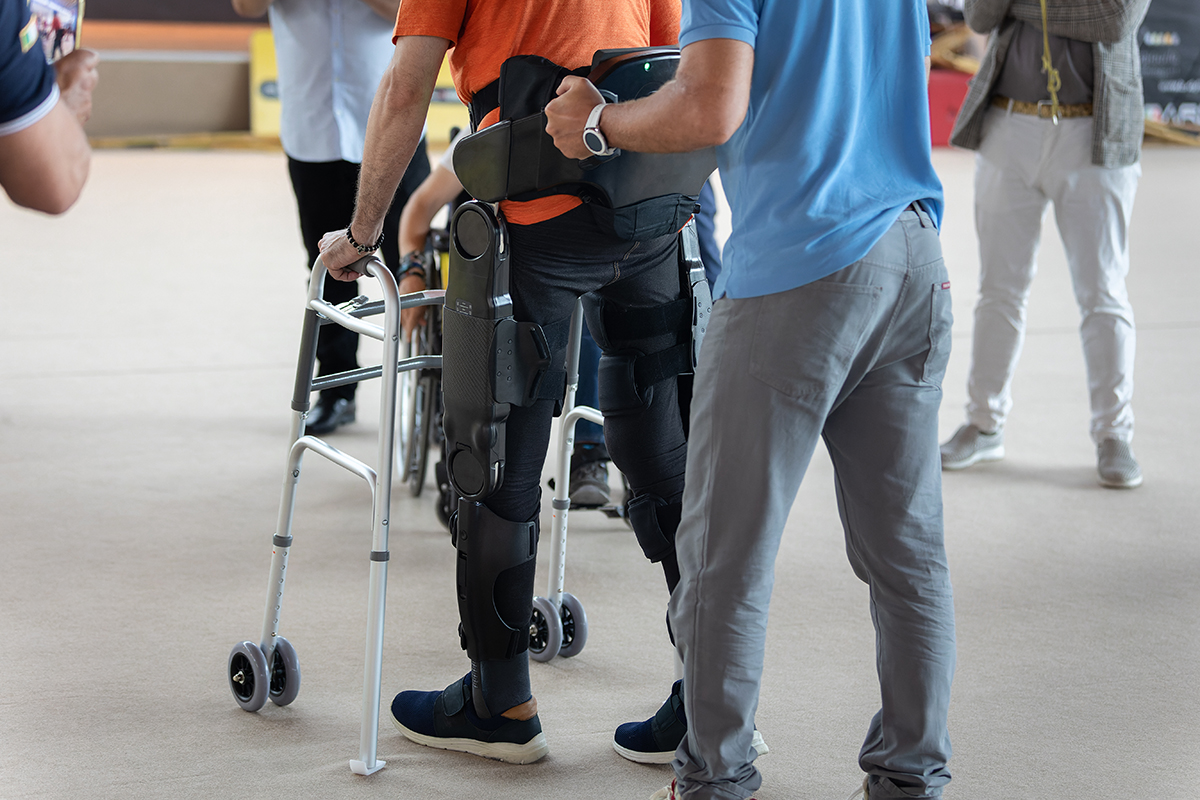
The goal is to develop an effective lower-limb strategy to restore lost leg function (e.g., range of motion) and gait ability, and improve quality of life in people with movement deficits following a neurological disorder.
People with neurological conditions, including individuals with upper motor neuron injury, experience motor and sensory deficits, muscle weakness, limited range of motion, low weight-bearing capacity, and impaired balance that limit ambulation and interfere with the ability to perform activities of daily living. Lower-limb rehabilitation robots can assist with physical therapy and alleviate the burden of caregivers and nurses. Thus, the goal of this project is to develop wearable and portable technology to assist leg motion and stretching, and correspondingly activate muscles in people with neurological conditions who experience spasticity.
Detailed study information is available at https://clinicaltrials.gov/study/NCT05926596.
For More Information
Contact Request
If you would like more information about becoming a research volunteer please submit the information below.