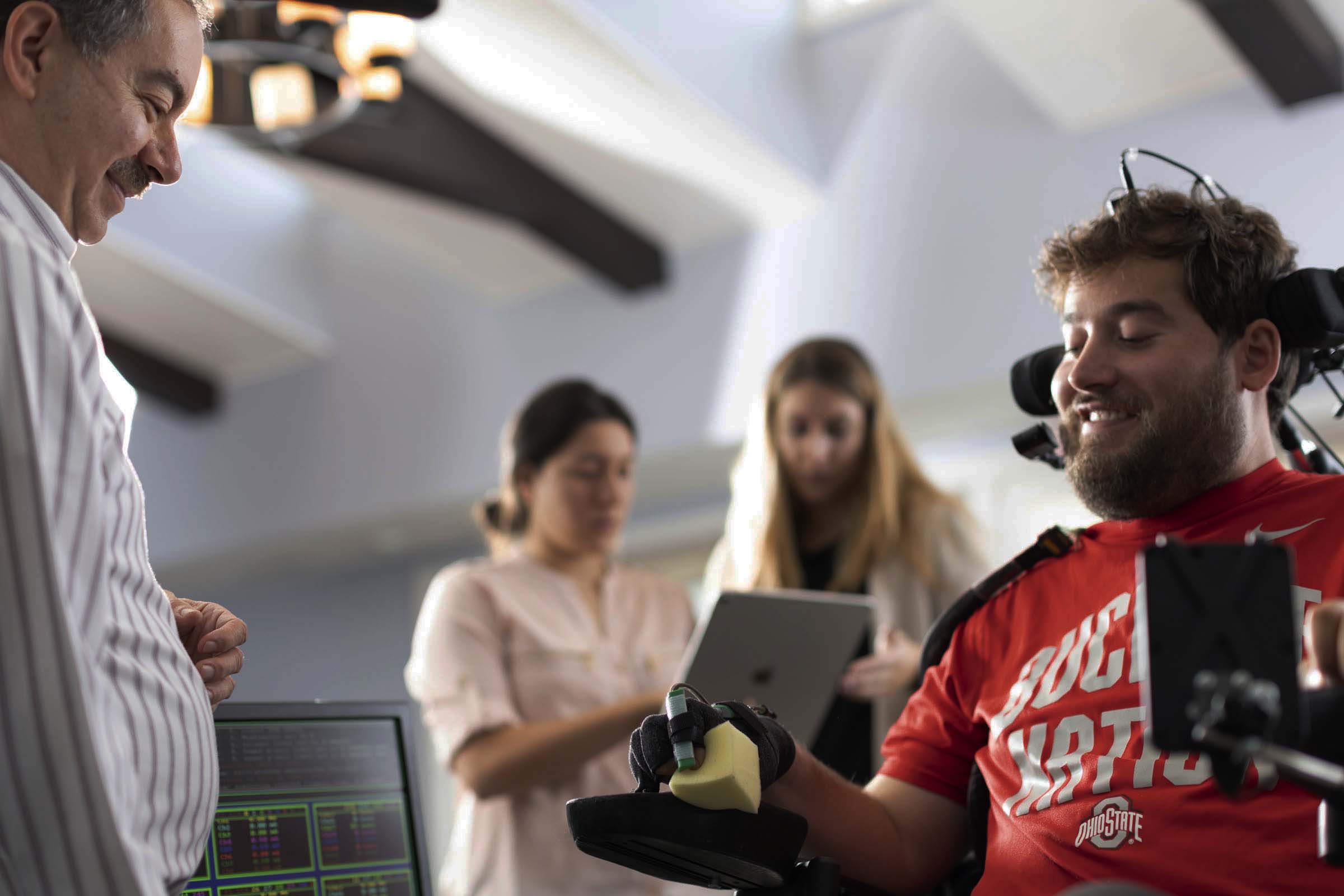
Restoring Function After Spinal Cord Injury
Research using electrical stimulation to help restore movement, sensation and bodily function shows great promise and is steadily advancing.
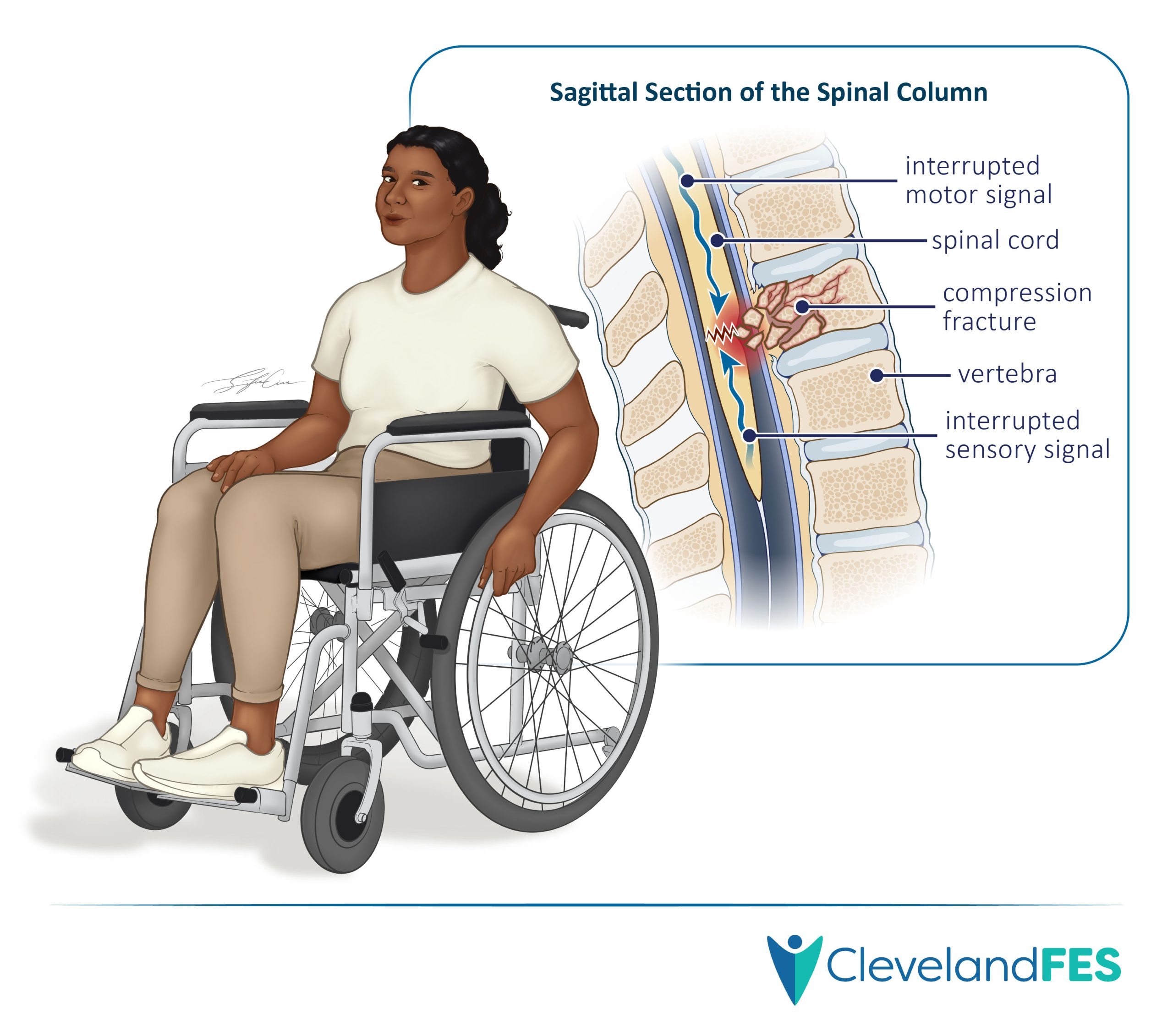
Damage to the spinal cord, to the nerves in the spinal canal, or to surrounding anatomy (such as a vertebra, as shown) can result in a spinal cord injury (SCI). The parts of the body controlled by the spinal cord at and below the level of the injury are affected. Paralysis or partial loss of movement can occur, along with loss of sensation, changes in reflex activity, and pain.
SCI Programs Overview
At present, damage to the spinal cord cannot be fully repaired but it potentially can be by-passed by applying a small electrical impulse to specific nerve(s) or muscle(s) to trigger movement or function.
Over the past three decades of research, FES has advanced and can now be used to help people with spinal cord injury to move their arms or legs, control their bowel and bladder, treat or prevent pressure sores, and support pelvic health. It can also be used to exercise muscles for greater strength and tone and improve circulation. Current studies focus on stimulating the correct muscles to make a person’s arm or leg move, while stimulation to the bladder or diaphragm is aimed at restoring bodily functions. Using electricity to stimulate and control a part of the body is known as Functional Electrical Stimulation or FES.