
Rehabilitation Research for Movement Disorders
People with various neurological conditions, including individuals with upper motor neuron injury, may experience motor and sensory deficits, muscle weakness, limited range of motion, low weight-bearing capacity, and impaired balance that limit ambulation and interfere with the ability to perform activities
of daily living.
These individuals may also experience spasticity, which is abnormal muscle tightness or movement patterns that causes certain muscles to contract all at once, potentially interfering with intended movement or walking.
Treatments often include physical and/or occupational therapy, medications, casting or bracing, and assistive devices.
Movement Disorders Overview
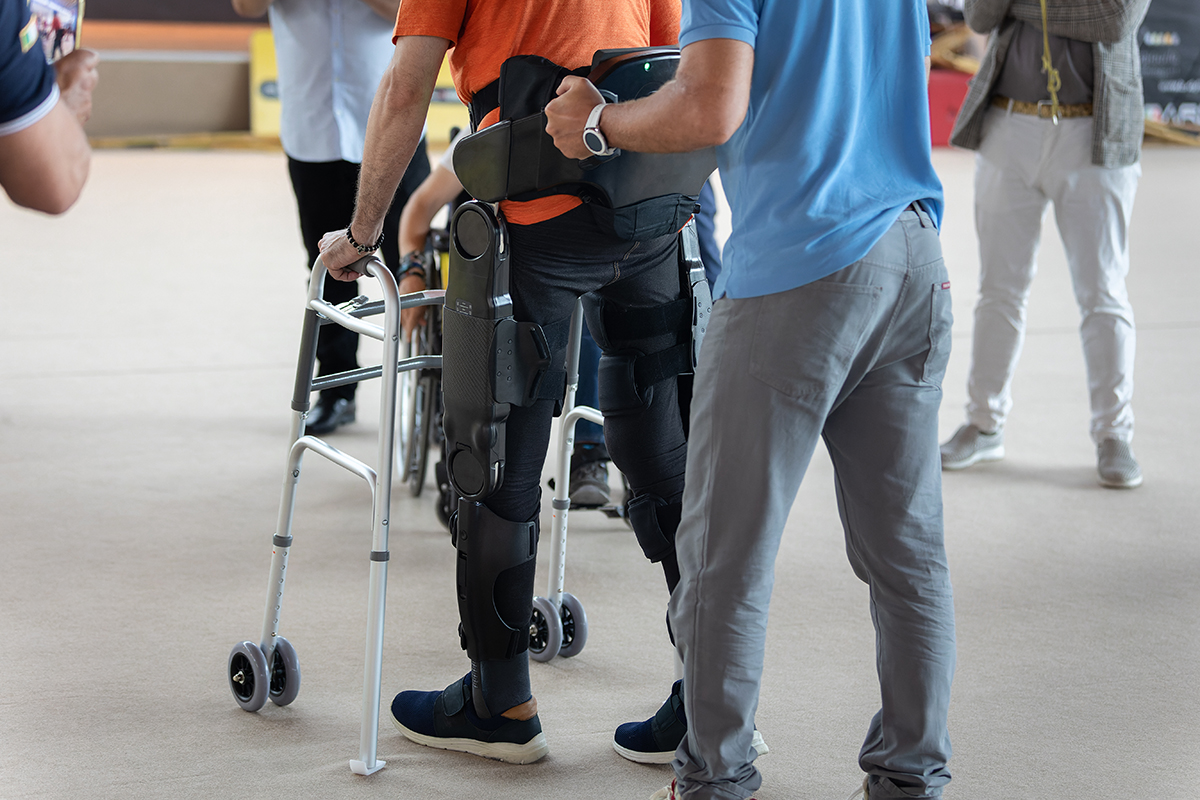
FES Center studies focusing on movement disorders currently utilize assistive devices such as exoskeletons as part of various approaches to therapy.